
Outlet and Switch Installation in the USA
Outlet and Switch Installation addresses connections that no longer carry current reliably. Over time receptacle contacts loosen from repeated plug insertions while switch contacts pit from arcing during repeated on-off cycles. Our technicians first confirm the circuit is de-energized at the panel then remove the device to inspect the conductor insulation and terminal screws for signs of overheating such as discoloration or melted plastic.
We match replacement devices to the existing wiring method whether it is knob-and-tube, armored cable, or nonmetallic sheathed cable. Each new receptacle or switch is rated for the measured load and installed with the correct torque on the terminal screws. This prevents future loose connections that could create heat and trip breakers. Outlet and switch installation is part of what Fulmer Electric does across the USA.
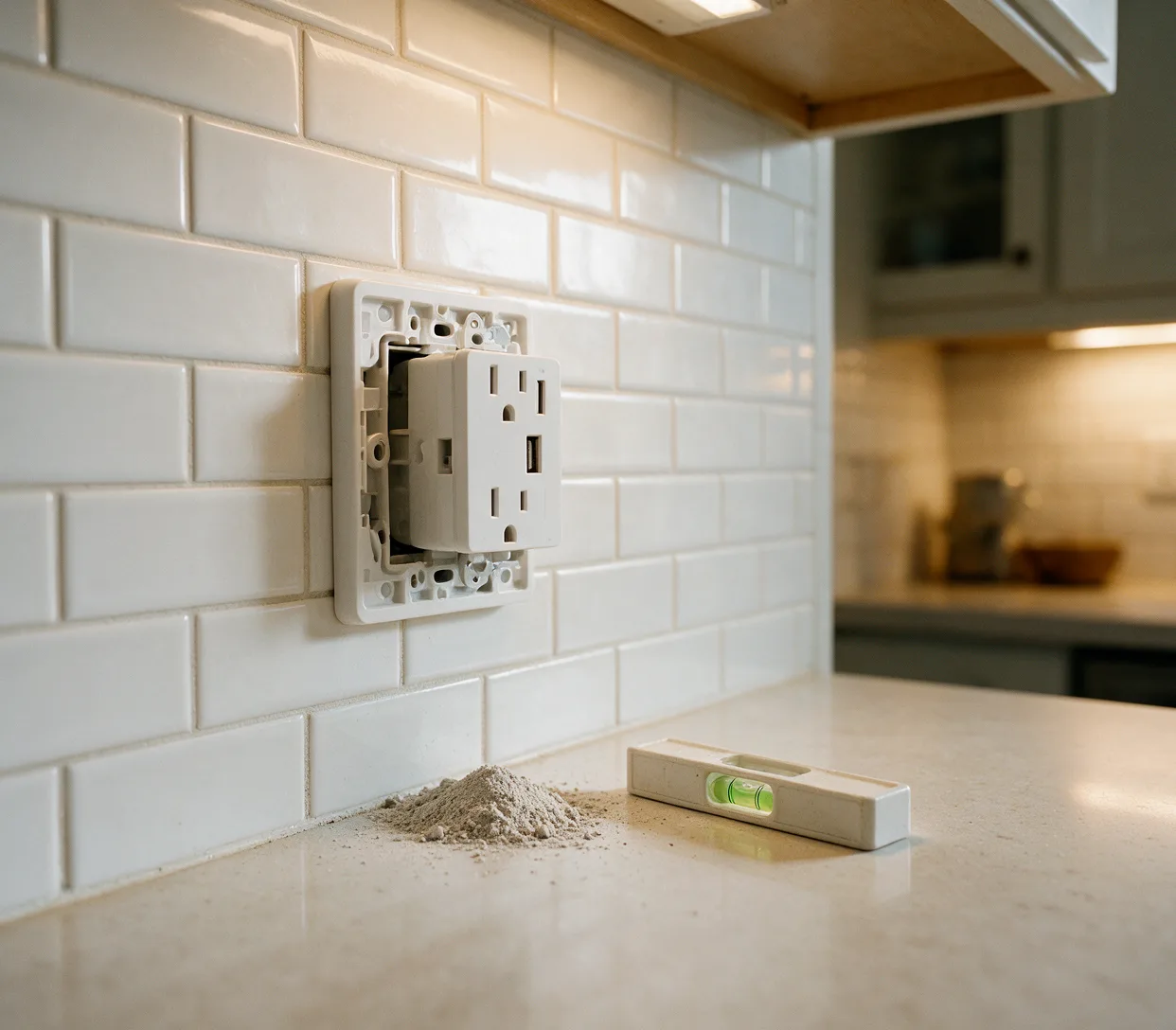
Warning Signs That Point to Outlet and Switch Installation Needs
- Receptacles feel warm to the touch after normal use
- Switch levers make a crackling sound when operated
- Plugs fit loosely and fall out of the outlet slot
- One circuit trips repeatedly when a certain lamp is turned on
- Faceplates show scorch marks or brown discoloration around the edges
Checks Our Technicians Perform on Site
Our technicians start by measuring voltage at the panel and at the device location to confirm the circuit is not overloaded. They use a non-contact voltage tester followed by a digital multimeter to verify proper grounding and neutral continuity. Any aluminum wiring discovered receives special connectors rated for aluminum-to-copper transitions.
They also note the presence or absence of AFCI or GFCI protection required by current code on bedroom and wet-location circuits. When protection is missing the installation includes an appropriate breaker or dead-front device to meet safety standards.
Device Choices Matched to Circuit Requirements
Standard 15-amp and 20-amp receptacles are selected when the conductor size and breaker rating allow. In kitchens and bathrooms we install GFCI receptacles or GFCI breakers to protect against ground faults. Dimmers and three-way switches receive the correct wattage rating and compatible bulb type noted on the fixture.
Weather-resistant covers are used on exterior locations and tamper-resistant receptacles are installed in living areas to reduce shock risk from inserted objects.
Materials and Hardware Used During Installation
We carry solid copper conductors in 14 AWG and 12 AWG sizes along with stranded wire for longer pulls. Each device is secured with the original box screws or new 8-32 machine screws when needed. Grounding pigtails are formed with green wire connectors to maintain a continuous equipment-grounding path.
Where boxes are damaged we replace them with new-work or old-work boxes rated for the wall material. Cable clamps are tightened to the manufacturer torque specification so the outer jacket remains intact and strain is removed from the conductors.
Steps Homeowners Can Take Before Arrival
Identify which breaker controls the affected outlet or switch and label it clearly. Unplug all devices from the circuit and avoid resetting a tripped breaker more than once. Note whether the problem affects only one device or several on the same circuit.
Clear the area around the device so the cover plate and surrounding wall surface are accessible. Have a flashlight ready in case the circuit must remain off during the work.
Outlet and Switch Installation questions
Can I replace an outlet myself?
Homeowners can safely turn off the breaker and remove the cover plate to look inside. Any work that involves loosening terminal screws or handling conductors should be left to our technicians because incorrect wiring can create shock or fire hazards.
Why do some outlets require GFCI protection?
GFCI devices monitor current flow and open the circuit within milliseconds if a ground fault is detected. This protection is required in locations where water or dampness increases shock risk such as bathrooms kitchens and outdoor receptacles.
What causes a switch to stop working?
Internal contacts wear from repeated arcing and the lever mechanism can bind. Heat from a loose connection can also deform the plastic housing and prevent proper operation. Our technicians measure voltage drop across the switch to confirm when replacement is necessary.
How long does a typical installation take?
Each device usually requires removal of the old unit inspection of the box and wiring then connection of the new device. Our technicians work methodically to verify every connection before restoring power and testing operation.
Request Outlet and Switch Installation
Contact Fulmer Electric to schedule Outlet and Switch Installation performed by our technicians across the USA.