
Lighting Installation in the USA
Lighting Installation covers more than swapping bulbs when fixtures no longer match room use or when circuits overload from added lamps. Our technicians trace existing wires to confirm gauge size and grounding before adding new runs, preventing heat buildup that can damage insulation.
Homeowners often call after noticing flickering or warm switches that point to undersized conductors feeding the light. We measure amperage draw at the panel and compare it against the fixture rating to decide whether a dedicated circuit or simple replacement works best. Fulmer Electric takes lighting installation calls from homeowners across the USA.
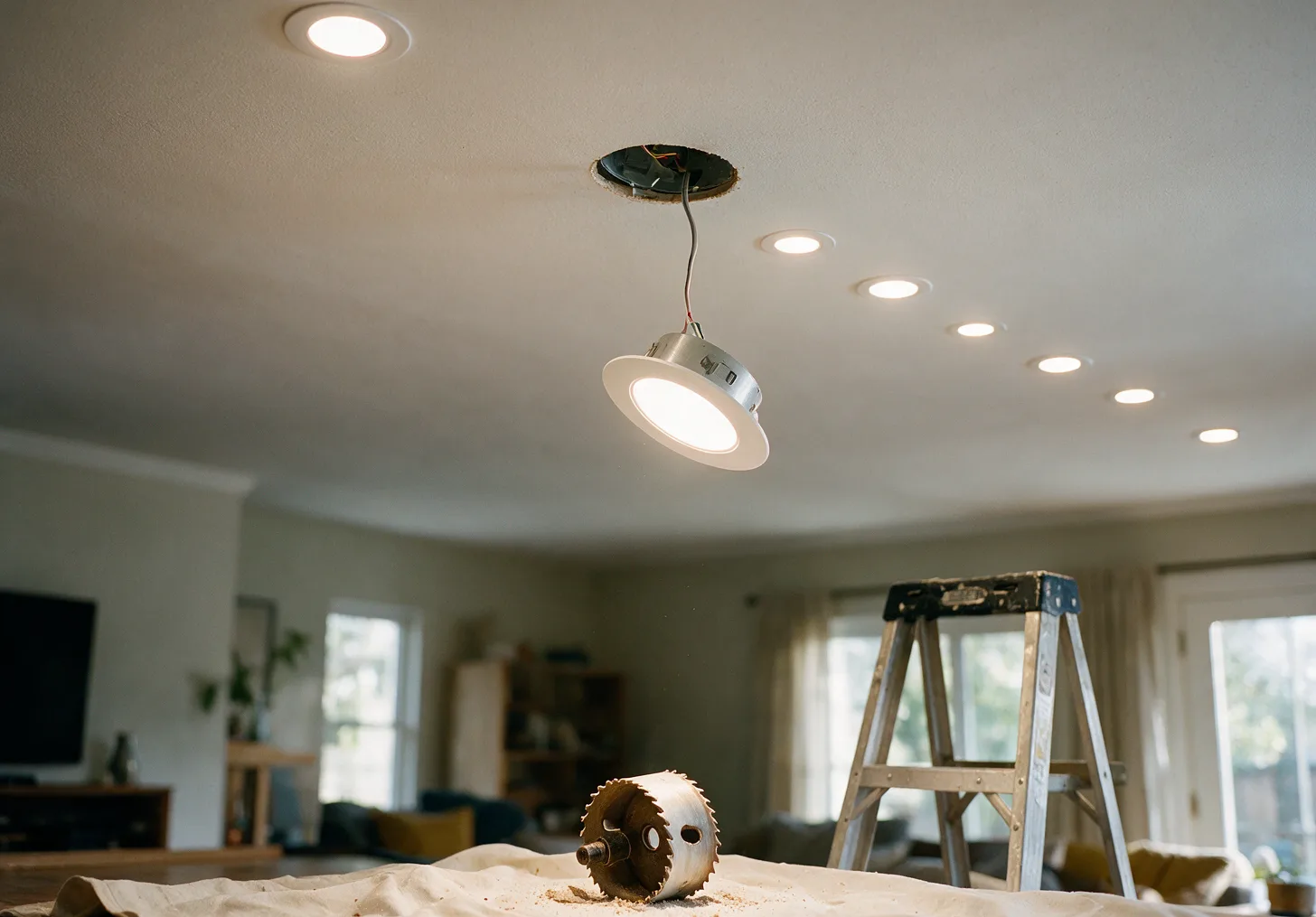
Signs Lighting Installation Is Needed
- Lights dim when other appliances start
- Flickering stays after bulb replacement
- Switch plates feel warm during use
- Fixture hums or buzzes under load
- Rooms stay dark despite new bulbs
Why Circuits Need Upgraded Lighting
Older homes often ran lighting on shared 15-amp lines that now carry electronics and chargers too. Adding modern LED arrays or recessed cans increases demand and can trip breakers when the total exceeds the original wire capacity.
We compare the existing conductor size to the new fixture wattage to see if a separate run from the panel prevents voltage drop that makes lights appear dull at the far end of a room.
Checks During a Lighting Assessment
Our technicians start at the panel to note breaker size and wire type feeding the area. They then test voltage at the switch box under load and check that the neutral stays continuous back to the service.
Next we examine box volume against the number of conductors and any dimmer modules planned, since overcrowding raises heat and shortens component life. Ground continuity gets verified with a meter before any fixture mounts.
Fixture Choices and Wiring Details
LED integrated units draw far less current than older incandescents yet still require correct polarity at the socket. We match Kelvin temperature to the space, such as warmer 2700K for living areas or cooler 4000K for task zones.
For damp locations like baths we select rated housings and gaskets that block moisture from reaching connections. Dimmers must list compatibility with the driver inside the fixture to avoid buzzing or early failure.
What Homeowners Can Do First
Switch off the breaker that controls the circuit and verify power is gone with a non-contact tester before touching any terminals. Note the existing bulb type and wattage so we can size replacements accurately.
Clear the area around the fixture of furniture and rugs so ladders fit safely. Have the room key or remote handy if the light ties into a smart system that needs pairing after installation.
Lighting Installation questions
How long does a typical Lighting Installation take?
Most single-room jobs finish in two to four hours once power is confirmed off. Larger areas with new runs from the panel may extend to a full day depending on access to joists and the number of fixtures involved.
Can existing wiring support brighter LED fixtures?
LEDs use less power, yet the original switch and box must still meet code for conductor count and grounding. We test voltage drop along the run to confirm the lights will reach full brightness without adding wire.
What materials do you commonly use for new lighting?
We select 14-gauge or 12-gauge copper conductors rated for the amperage, tamper-resistant receptacles where needed, and UL-listed fixtures matched to the environment. Junction boxes sized for the conductor count keep connections cool.
Do you install smart lighting controls?
Yes, we wire neutral-required dimmers and Wi-Fi or Zigbee modules that work with standard apps. Each device gets tested for proper pairing and scene settings after the physical connections are complete.
Schedule Lighting Installation
Contact Fulmer Electric to plan new fixtures that fit your circuits and room use.