
Circuit Breaker Repair in the USA
Circuit breakers protect wiring by opening when current exceeds safe limits. Our technicians begin by measuring the actual draw on each circuit with a clamp meter to see whether an appliance or a wiring fault is pushing the breaker past its rating. They also check the panel for signs of heat discoloration on the bus bars because repeated overloads can warp the metal and create poor contact points that generate more heat.
Before any work starts the technician isolates the affected circuit at the main disconnect so no voltage reaches the breaker being examined. This step lets them remove the breaker without risk and test its mechanical operation by hand while comparing the trip curve to the original specifications printed on the side of the unit. Fulmer Electric covers circuit breaker repair jobs in the USA.
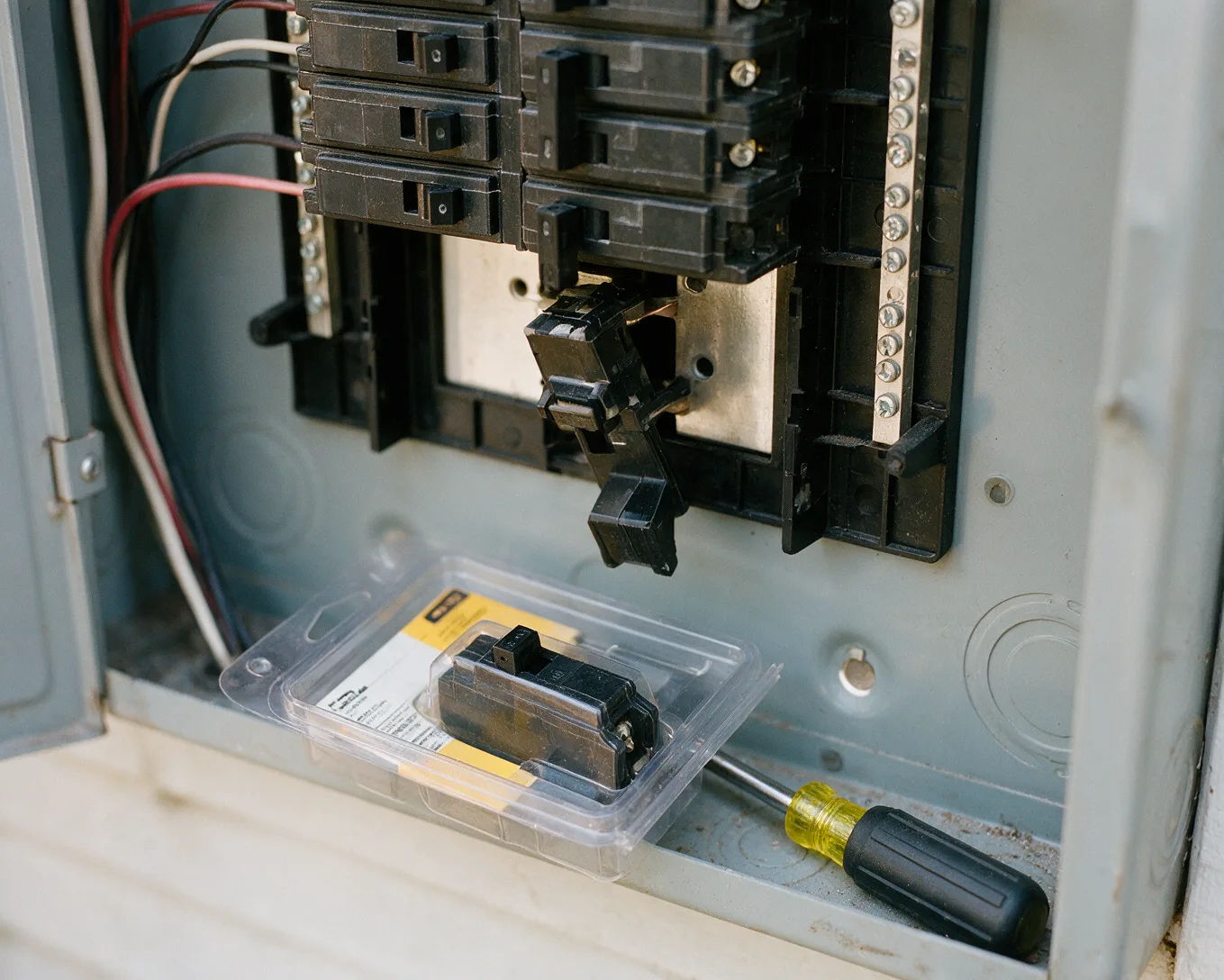
Warning Signs That Point to Circuit Breaker Repair
- Breaker trips several times a week even when no new devices are added
- Warm or discolored spots appear on the panel cover near one breaker
- A burning plastic smell comes from the electrical panel during use
- Lights flicker only on circuits protected by one particular breaker
- Resetting requires extra force or the handle feels loose after tripping
Common Causes Behind Breaker Failures
An overloaded circuit happens when too many appliances share one run of wire, so the breaker opens to prevent melting insulation. Our technicians calculate the total amperage of connected loads and compare it against the wire gauge and breaker rating to confirm whether the problem is simply too many devices or a hidden short.
Age also weakens the internal spring and contacts inside a breaker. After fifteen or twenty years the mechanism may not snap open cleanly, allowing small arcs that erode the metal further. Replacement with an identical amperage and type restores the original protection curve without altering the panel design.
Measurements and Checks Performed on Site
Technicians first verify line voltage at the main lugs, then measure voltage drop across each suspect breaker under load. A drop greater than three percent indicates pitted contacts that need replacement. They also use an infrared thermometer to scan for hot spots on the breaker body and the neutral bar, because heat shows where resistance has increased.
Continuity testing with the breaker removed confirms whether the internal path is still complete when the handle is on. If the breaker fails this test or shows signs of carbon tracking around the terminals, it is replaced rather than reset. All connections are retorqued to manufacturer specifications while the panel is open.
Repair Choices and Replacement Parts
When only one or two breakers are damaged they can be swapped for new units of the same brand and series so the panel listing remains valid. Our technicians keep common single-pole, double-pole, and GFCI breakers on the truck to complete most repairs in one visit without special ordering.
If the bus bars themselves show pitting or the enclosure is corroded, installing a new breaker alone will not solve the underlying issue. In that case the entire panel is replaced with a larger amperage model that accommodates future circuits while using the same branch wiring already in the walls.
Steps Homeowners Take Before the Technician Arrives
Note which rooms or appliances lose power when the breaker trips and whether the problem happens at specific times such as when the air conditioner starts. This pattern helps the technician decide which circuit to examine first. Avoid repeatedly resetting the breaker, because each attempt can worsen any existing short or overload.
Clear a path to the panel and turn off any large loads on the affected circuit so the technician can work safely. If a burning odor is present, shut off the main breaker if it is safe to reach and wait outside until help arrives rather than attempting further resets.
Circuit Breaker Repair questions
Why does my breaker keep tripping after I reset it?
Repeated tripping usually means the circuit is drawing more current than the breaker rating allows or a short exists downstream. Our technicians measure the actual load and inspect the wiring for damage before deciding whether the breaker itself has worn out and needs replacement.
Can I simply replace the breaker myself?
Working inside a live panel exposes a homeowner to full line voltage and arc-flash hazards. Proper torque on the new breaker terminals and verification that the replacement matches the panel listing both require experience and tools that most homeowners do not have on hand.
What parts do you carry for Circuit Breaker Repair?
We stock single-pole, double-pole, and combination arc-fault breakers in the most common amperages used in residential panels. When a panel requires an obsolete style we source an approved substitute that maintains the original safety listing without modifying the enclosure.
How long does a typical Circuit Breaker Repair take?
Most single-breaker replacements are finished in under an hour once the panel is opened. If bus-bar damage or corrosion requires a full panel change the work usually takes three to four hours because new circuits must be labeled and tested before power is restored.
Schedule Circuit Breaker Repair Today
Contact Fulmer Electric to have our technicians inspect the panel and replace any faulty breakers.