Electrical Troubleshooting in the USA
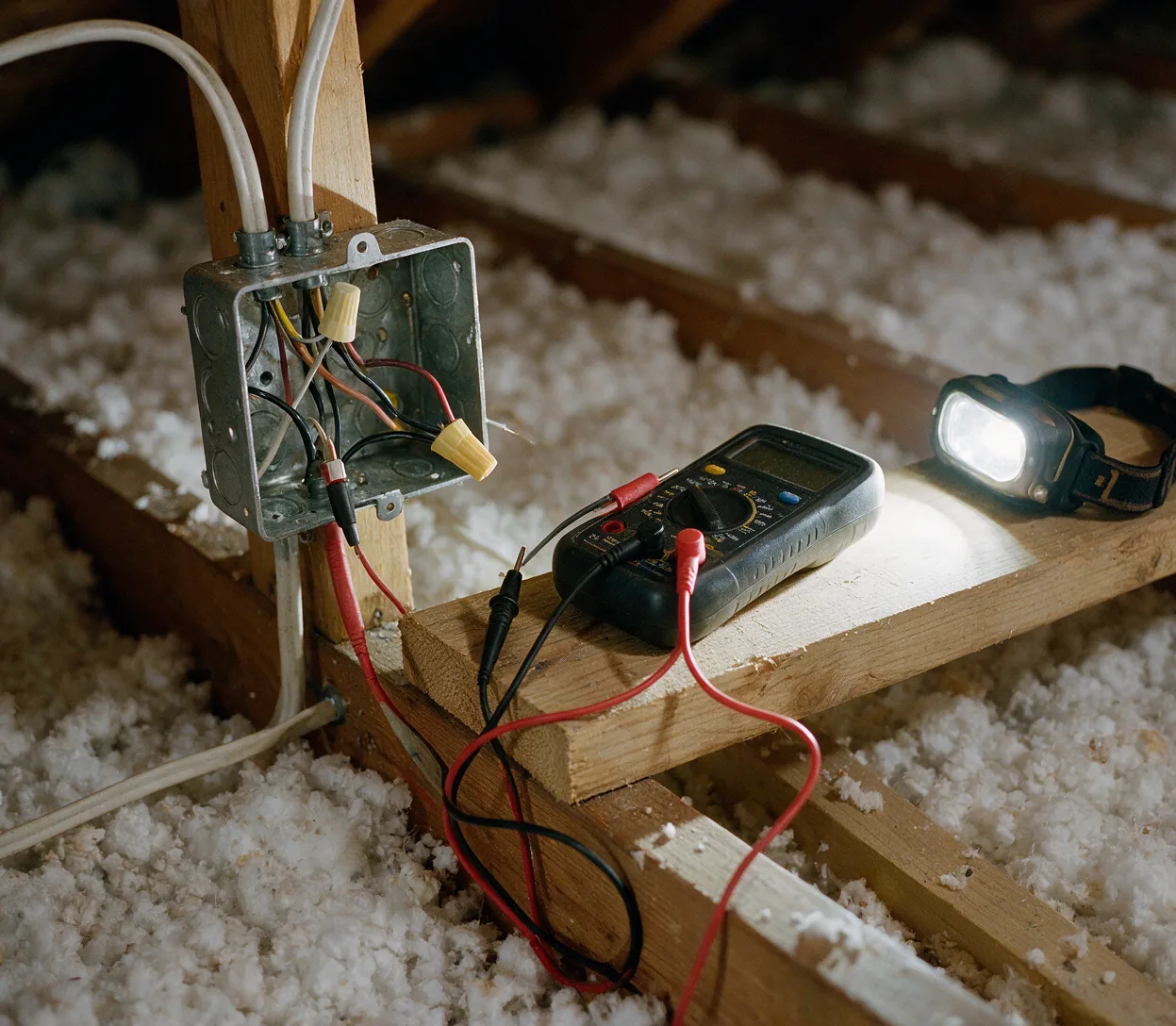
Our technicians start Electrical Troubleshooting by mapping every circuit from the panel outward, testing for voltage drops that signal corrosion or undersized wire where current should flow steadily. Homeowners often notice appliances that cycle oddly or outlets that feel warm to the touch, signs that point to resistance building inside connections rather than a simple bulb failure.
We use this step-by-step approach because random swapping of breakers rarely solves the real cause and can mask problems elsewhere in the branch wiring. By isolating each segment with a multimeter and load tester we trace the path of electricity, confirming where current is lost or diverted before recommending any change to the existing system. Homeowners anywhere in the USA can book electrical troubleshooting with Fulmer Electric.
Warning Signs During Daily Use
- Lights dim when a larger motor starts on the same circuit.
- Outlets that feel warm after running a space heater or iron.
- Breakers that trip only after several appliances run together.
- Buzzing sounds from switches when lights are turned on.
- Sparks visible inside an outlet when a cord is inserted.
Common Causes Found During Electrical Troubleshooting
Loose terminals at the panel or inside junction boxes create high-resistance points that generate heat under load. Over time the metal oxidizes, increasing resistance further until the connection fails or the wire insulation begins to discolor. Our technicians open each box along the suspect circuit to check torque on every screw and look for melted wire nuts that no longer grip conductors tightly.
Undersized wire run to added outlets or appliances also causes voltage drop that grows worse as distance increases. Aluminum branch wiring from older homes can loosen at terminations because the metal expands and contracts differently than copper screws. We measure actual voltage at the device under load and compare it to the panel reading to confirm whether the conductor size matches the amperage the circuit must carry.
Measurements and Tests Our Technicians Perform
We begin with a no-load voltage check at the panel and at the farthest outlet on each circuit, then repeat the test while placing a calibrated load that draws the expected amperage. A drop greater than five percent under load indicates excessive resistance somewhere along the run. Infrared thermography reveals hot spots at hidden junctions without removing drywall, allowing us to target the exact location for further inspection.
Ground-fault and arc-fault testers verify whether protective devices respond to simulated faults, while a megger checks insulation resistance between conductors and ground. These readings tell us whether aged wiring has developed microscopic cracks that allow leakage current, which can trip GFCI devices or create shock hazards even when the circuit appears to function normally.
Repair Options and Materials We Use
When a loose connection is isolated we replace the device or splice with torque-rated connectors and copper pigtails if aluminum wire is present. For voltage-drop issues we may pull new conductors of the correct gauge through existing conduit or open walls only where necessary. New breakers with the same trip curve replace any that show signs of overheating or weakened internal springs.
We carry only UL-listed components such as commercial-grade receptacles rated for 20 amps continuous use and copper THHN wire in the sizes required by the circuit ampacity. Each repaired joint receives a new wire nut or insulated terminal block, and we label the circuit at the panel so future troubleshooting starts with clear documentation rather than guesswork.
What Homeowners Can Check Before We Arrive
Turn off any suspect circuit at the panel and note which lights or outlets lose power so we can focus on that branch immediately. Avoid resetting a tripped breaker more than once if it trips again right away, because repeated attempts can overheat the wire and create a fire risk before the root cause is found. Keep a simple list of which appliances were running when the problem appeared.
Do not open the panel cover or remove outlet faceplates yourself. Instead, feel for warmth at accessible receptacles with the back of your hand and note any unusual odors near switches. These observations help our technicians decide which areas to examine first once they arrive with the proper testing equipment.
Electrical Troubleshooting questions
Why does the same breaker trip repeatedly?
Repeated trips usually trace to either an overloaded circuit or a short that only appears under certain loads. Our technicians measure actual current draw on each leg and inspect splices for insulation damage that allows conductors to touch when vibration or heat expands the wire.
Can flickering lights mean a problem at the panel?
Flickering often starts at a loose main lug or neutral connection inside the panel where all branch circuits return. We test voltage between hot legs and neutral under load to confirm whether the issue is upstream of the branch wiring or farther out in the home.
What if outlets stop working after a storm?
Surges can damage internal contacts or trip hidden GFCI devices in the circuit path. We check every protective device in sequence and use a continuity tester to locate any open conductor caused by water intrusion at outdoor boxes or underground runs.
How do you find issues behind finished walls?
We use voltage sniffers, thermal cameras, and signal tracers that follow the wire path without demolition. Once the approximate location is isolated we make a small access opening only where measurements indicate the fault exists, then restore the surface after the repair.
Schedule Electrical Troubleshooting
Contact Fulmer Electric to arrange Electrical Troubleshooting and restore steady power throughout your home.