Electrical Repair in the USA
When circuits stop working our technicians ask about recent appliance additions or any flickering that started after a storm. They trace how heat from loose terminals or undersized wire creates resistance that trips breakers or melts insulation just like a clogged pipe backs up water pressure until something bursts.
Homeowners notice problems first through outlets that feel warm or switches that spark when flipped. Our crews measure voltage drop under load and check torque on lugs because even a half-turn loose connection can raise resistance enough to start a fire inside the wall. Fulmer Electric schedules electrical repair visits throughout the USA.
Common Warning Signs
- Breakers trip repeatedly when several appliances run at the same time in one area.
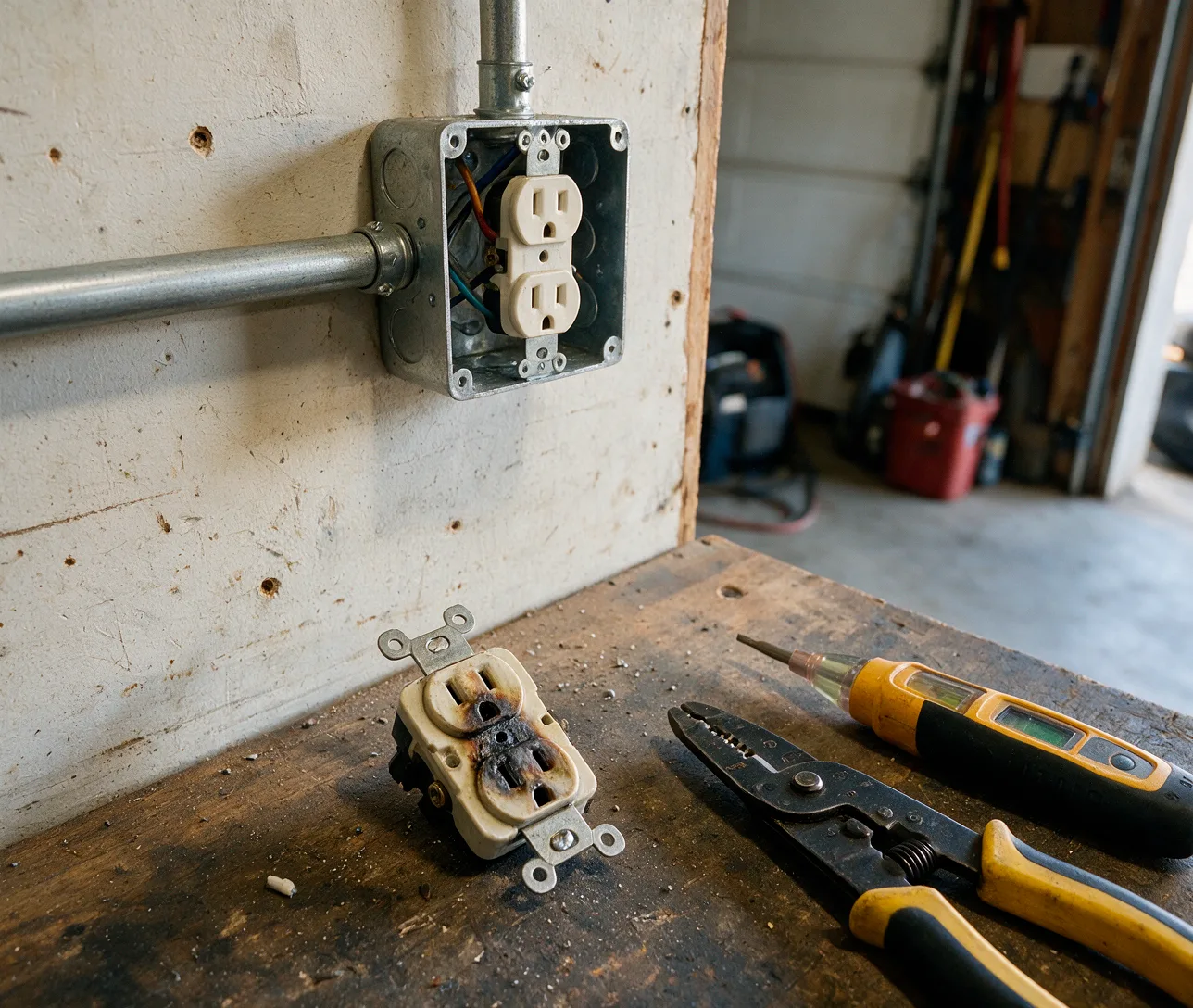
- Outlets or switches feel warm or emit a burning smell during normal use.
- Lights dim or flicker every time a large motor such as a refrigerator starts.
- Sparks appear inside switch plates when a device is turned on or off.
- Extension cords become necessary because fixed outlets no longer supply enough power.
Typical Causes We Find
Most service calls trace back to aluminum wiring that has loosened over decades or copper connections that oxidized after moisture entered a box. Our technicians also locate undersized conductors that were installed before the home gained air conditioning and other continuous loads.
Another frequent cause is shared neutrals between two circuits that create imbalance when one leg draws more current. Measuring each leg separately shows the neutral carrying twice the expected amperage and overheating inside the wall.
What Technicians Measure and Check
At the panel we test each breaker with a calibrated load meter while monitoring voltage at the farthest outlet. We also remove device covers to inspect for melted plastic, discolored terminals, and proper wire gauge relative to breaker size.
In the attic or crawl space we look for rodent damage to cables and splices made with incorrect connectors. Every accessible junction receives a torque check because vibration and thermal cycling loosen screws even when they were originally tightened correctly.
Repair and Replacement Choices
When a single breaker fails we replace it with the same amperage and type, then verify the wire insulation is intact. If multiple breakers show heat damage we recommend replacing the entire panel interior rather than patching individual components.
For damaged wiring we pull new conductors through existing runs when possible and install new boxes with larger volume to meet current code. We use copper pigtails with listed connectors on aluminum circuits to create a permanent, code-compliant transition.
What to Do Before Help Arrives
Turn off the breaker that feeds the affected area and unplug every cord from those outlets. This prevents further overheating while our technicians travel to the home and gives them a safe starting point for testing.
Note which lights or appliances stopped working and whether the issue began after a recent storm or after new equipment was added. Write the observations on paper so the technician can focus testing exactly where the symptoms appear.
Electrical Repair questions
Why do breakers trip even when nothing new was plugged in?
Loose connections inside the panel or a deteriorating breaker can create enough resistance to generate heat and trip the device. Our technicians test each breaker under load and inspect lugs for proper torque to locate the hidden fault.
Can I replace an outlet myself if it feels warm?
Turning off the breaker and swapping a standard outlet is possible for some homeowners, yet the warmth often signals a problem further upstream such as a shared neutral or undersized wire. We recommend a full inspection before any parts are replaced.
How do you decide whether to repair or replace wiring?
We measure voltage drop, check insulation resistance, and examine the condition of every accessible splice. When multiple sections show heat damage or rodent chew marks, pulling new conductors through the existing path is usually the most reliable long-term fix.
What parts do you typically carry for Electrical Repair?
Our trucks stock common breakers, copper and aluminum-rated connectors, standard and tamper-resistant outlets, and GFCI devices. For older panels we also carry replacement interiors so we can restore service the same visit when parts match the existing enclosure.
Schedule Electrical Repair
Contact Fulmer Electric to arrange Electrical Repair across the USA and restore safe power to your home.