
Home Rewiring in the USA
Older homes often contain aluminum branch wiring or knob and tube runs installed decades ago that were never designed for today's appliances and electronics. These materials heat up under repeated heavy loads because their ampacity ratings fall short of current requirements. Our technicians trace each circuit back to the panel to confirm conductor size, insulation condition, and grounding integrity before recommending any changes.
Rewiring restores proper current flow without voltage drop that dims lights or trips breakers during normal use. The process starts with identifying which rooms share neutrals or lack equipment grounding conductors. Once mapped, new copper runs can be pulled through existing pathways or added surface raceway where walls cannot be opened easily. Need home rewiring? Fulmer Electric answers from anywhere in the USA.
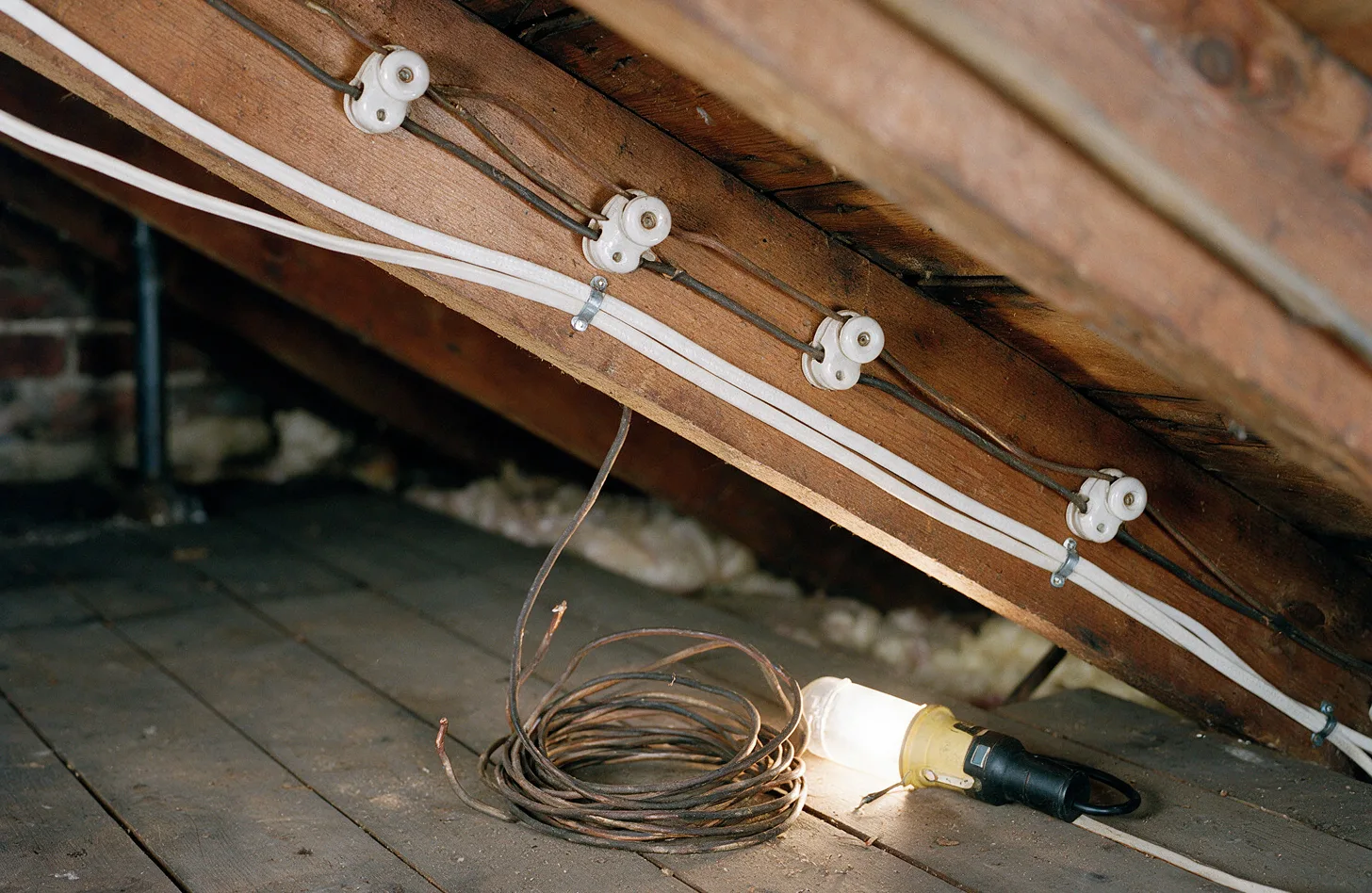
Warning Signs That Point to Rewiring Needs
- Lights dim or flicker when large appliances start.
- Outlets feel warm or emit a faint burning smell.
- Breakers trip often even with modest loads connected.
- Two prong outlets remain throughout most rooms.
- Aluminum wiring is visible at the main panel or splices.
Common Causes Behind the Need for New Wiring
Homes built before 1970 frequently rely on undersized conductors or shared neutrals that cannot handle simultaneous use of microwaves, air conditioners, and charging stations. Over time the insulation cracks from heat cycling and allows arcing between adjacent wires inside the wall. Our technicians measure voltage at the farthest outlet under load to quantify how much drop occurs along each run.
Additions or finished basements sometimes receive extensions spliced with mismatched wire gauges or missing junction boxes. These shortcuts create high resistance points that generate heat and eventually fail. Checking every accessible splice point reveals whether the original wiring can stay or must be replaced entirely.
What Technicians Measure and Inspect During an Assessment
Technicians begin at the service panel by verifying breaker sizes against conductor ampacity and confirming the presence of a proper equipment grounding conductor on every branch. They then use a receptacle tester and a loaded voltage drop meter at multiple outlets to locate high resistance segments. Thermal imaging locates warm spots behind walls where connections have loosened.
In the attic and basement, insulation condition is checked for discoloration or rodent damage. Junction boxes are opened to examine splice quality and to confirm that neutrals remain isolated from ground except at the main panel. These steps determine whether partial rewiring or a full home replacement will deliver stable voltage and prevent future overheating.
Materials and Installation Choices Available
Copper NM cable with ground remains the standard choice for most interior walls because it offers low resistance and reliable terminations. Where fishing wire through finished ceilings proves difficult, surface mounted metal raceway provides a code compliant path while keeping disruption minimal. AFCI breakers are installed at the panel for all bedroom and living area circuits to detect series and parallel arcing faults.
For kitchens and laundry areas, individual 20 amp circuits with 12 gauge wire prevent overloads when multiple high draw devices operate together. Ground fault protection is added in bathrooms, garages, and outdoors using GFCI breakers or receptacles. Each new run is labeled at both ends so future troubleshooting stays straightforward.
Steps Homeowners Can Take Before Technicians Arrive
Unplug unnecessary devices from circuits that trip frequently and note which rooms share the same breaker by turning off one breaker at a time. Record the locations of two prong outlets and any warm switches so the assessment can focus on those areas first. Avoid resetting tripped breakers repeatedly because repeated overloads can damage connected equipment.
Clear access to the main panel and attic entries before the visit. This allows inspection to begin immediately rather than waiting for pathways to be opened. These simple preparations help the crew map the existing system quickly and discuss targeted replacement options without unnecessary delays.
Home Rewiring questions
How long does a typical Home Rewiring project take?
Duration depends on home size and access to wall cavities. Most single story homes can be completed in three to five days when new cable can be fished through existing openings. Two story homes with finished basements often require an extra day to route additional homeruns and restore finished surfaces.
Will new wiring change how my outlets look?
New outlets match existing style and color so the change remains nearly invisible. Tamper resistant receptacles are installed as standard because they prevent objects from entering the slots. Decora style switches can be added if desired for a more modern appearance without extra cost in materials.
Can rewiring be done one room at a time?
Yes, circuits can be addressed individually when budget or occupancy limits full access. Each new run is still connected to AFCI or GFCI protection at the panel and tested for proper polarity and grounding. Future rooms simply tie into the updated panel without repeating earlier work.
What happens to the old wiring during replacement?
Abandoned conductors are removed where possible or capped and labeled as unused so they cannot be accidentally re energized later. Removing old wire reduces fire load inside walls and frees space for new cable. All removed material is hauled away at the end of the job.
Plan Your Home Rewiring Project
Contact Fulmer Electric to review your home's wiring condition and discuss upgrade options that fit current needs.